
ALLERTON ROAD
- (roman brick)
- (douglas fir)
- (silver travertine)
Allerton Road is a new-build, low-energy home in Liverpool, set among mature trees in a leafy suburban neighbourhood. The design brings together natural light, carefully framed sightlines and a close connection to nature with a series of crafted architectural moments. The result is a home that feels contemporary, calm and rooted in its setting.
The house is organised around a sequence of purposeful moments: a double-height entrance hall, a sculptural stone island and a feature staircase. From the outset, these spatial and material ideas were developed alongside a fabric-first energy strategy, allowing environmental performance to become integral to the architecture rather than a later addition.
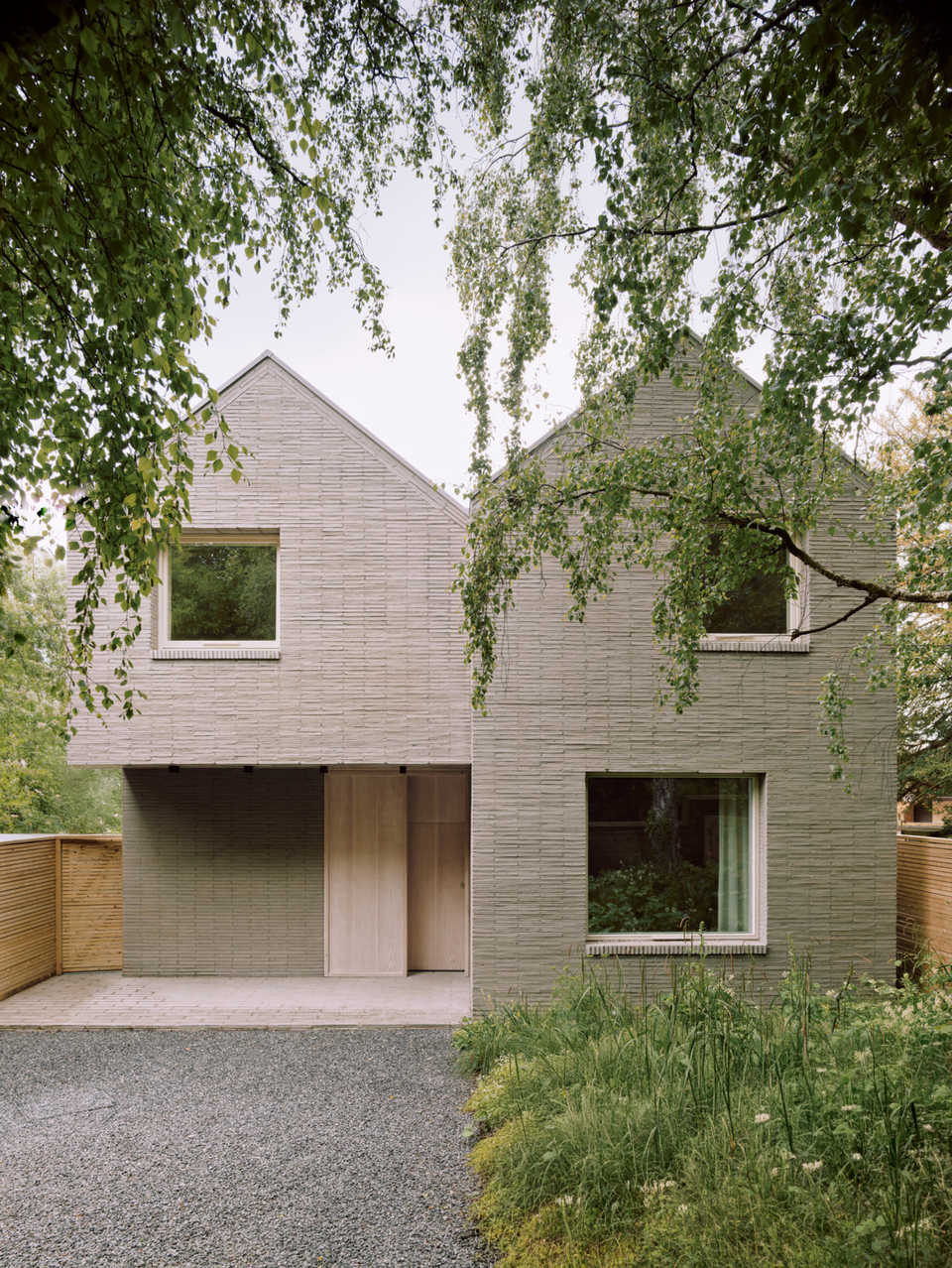
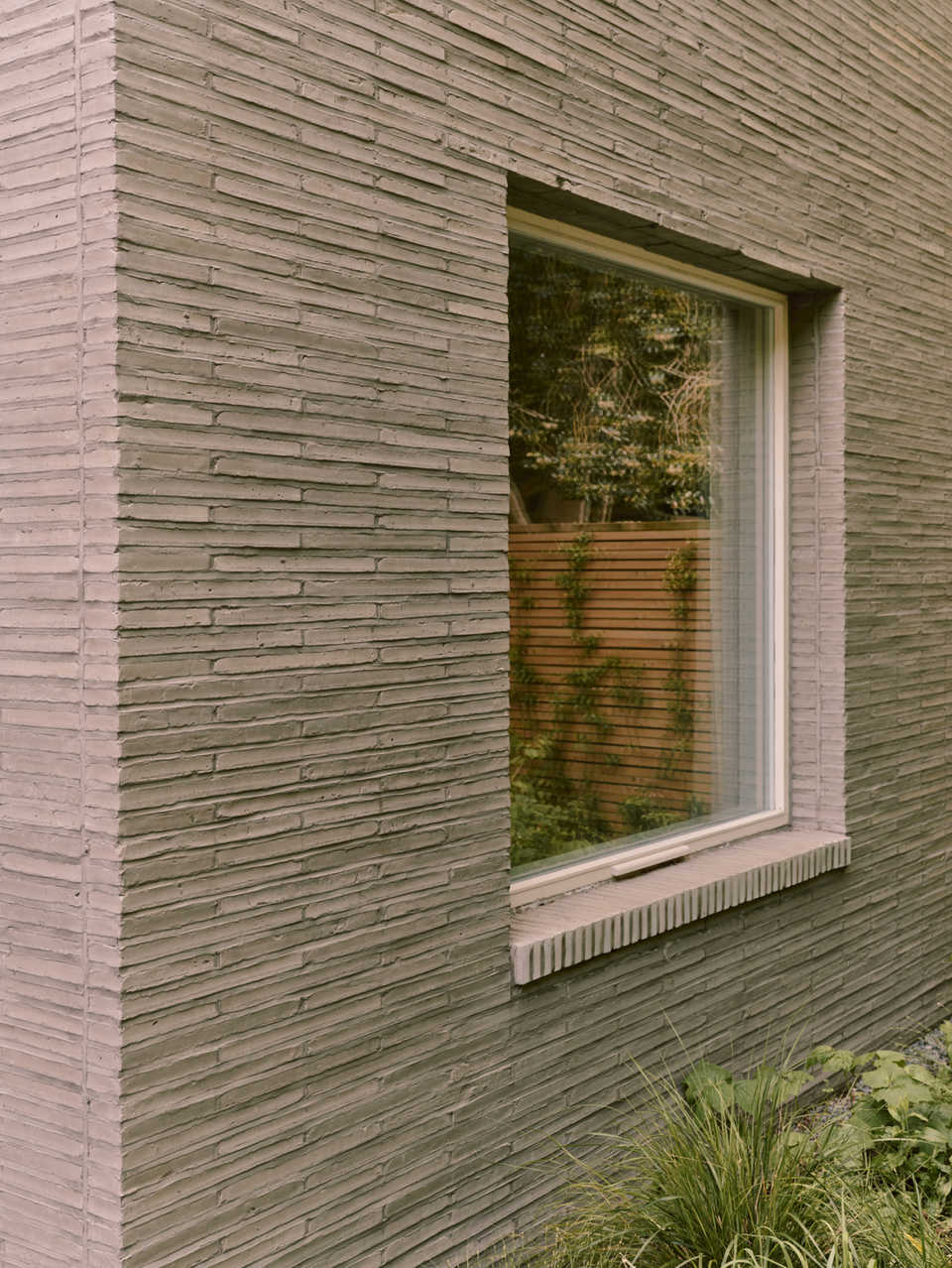
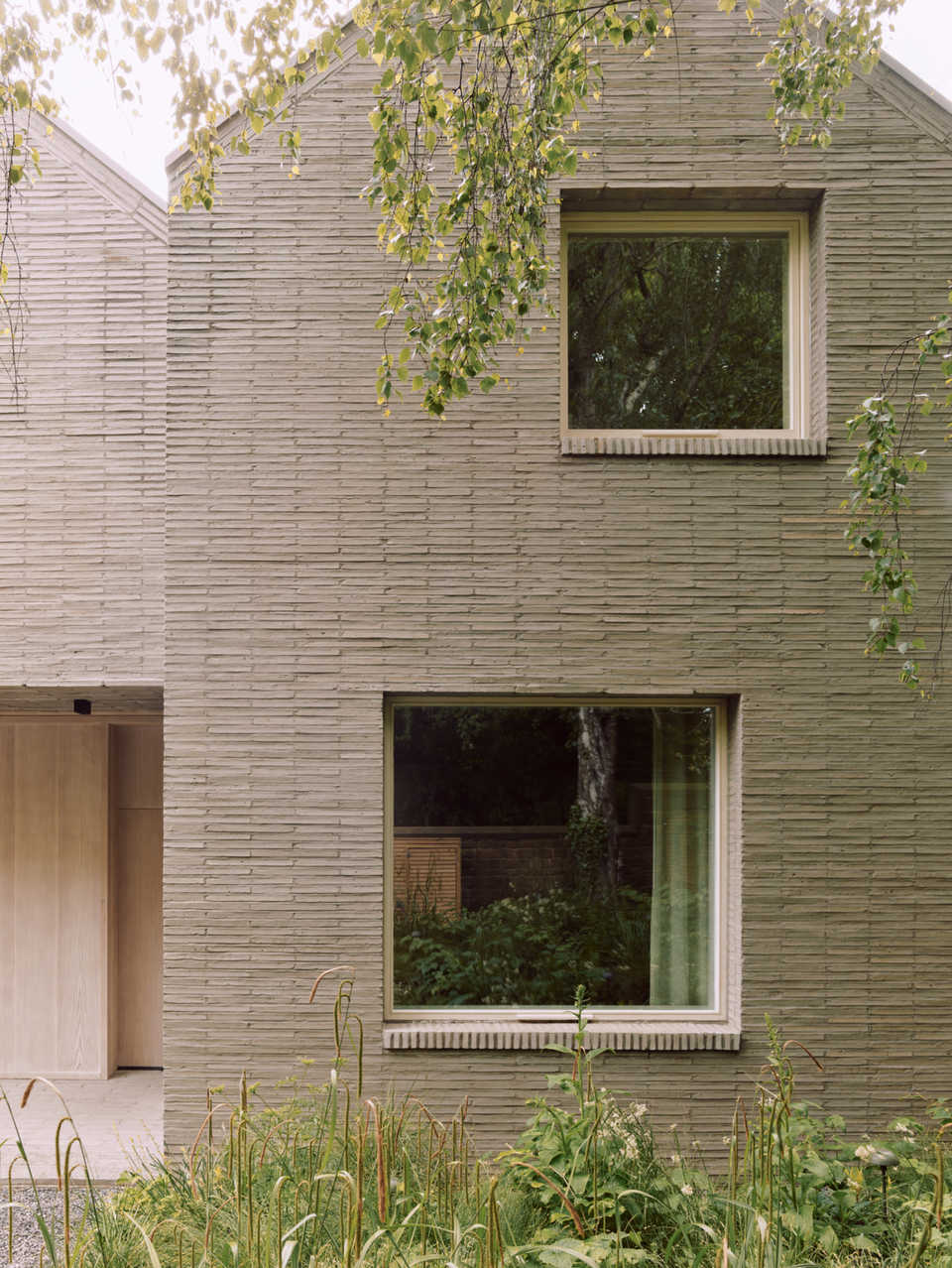
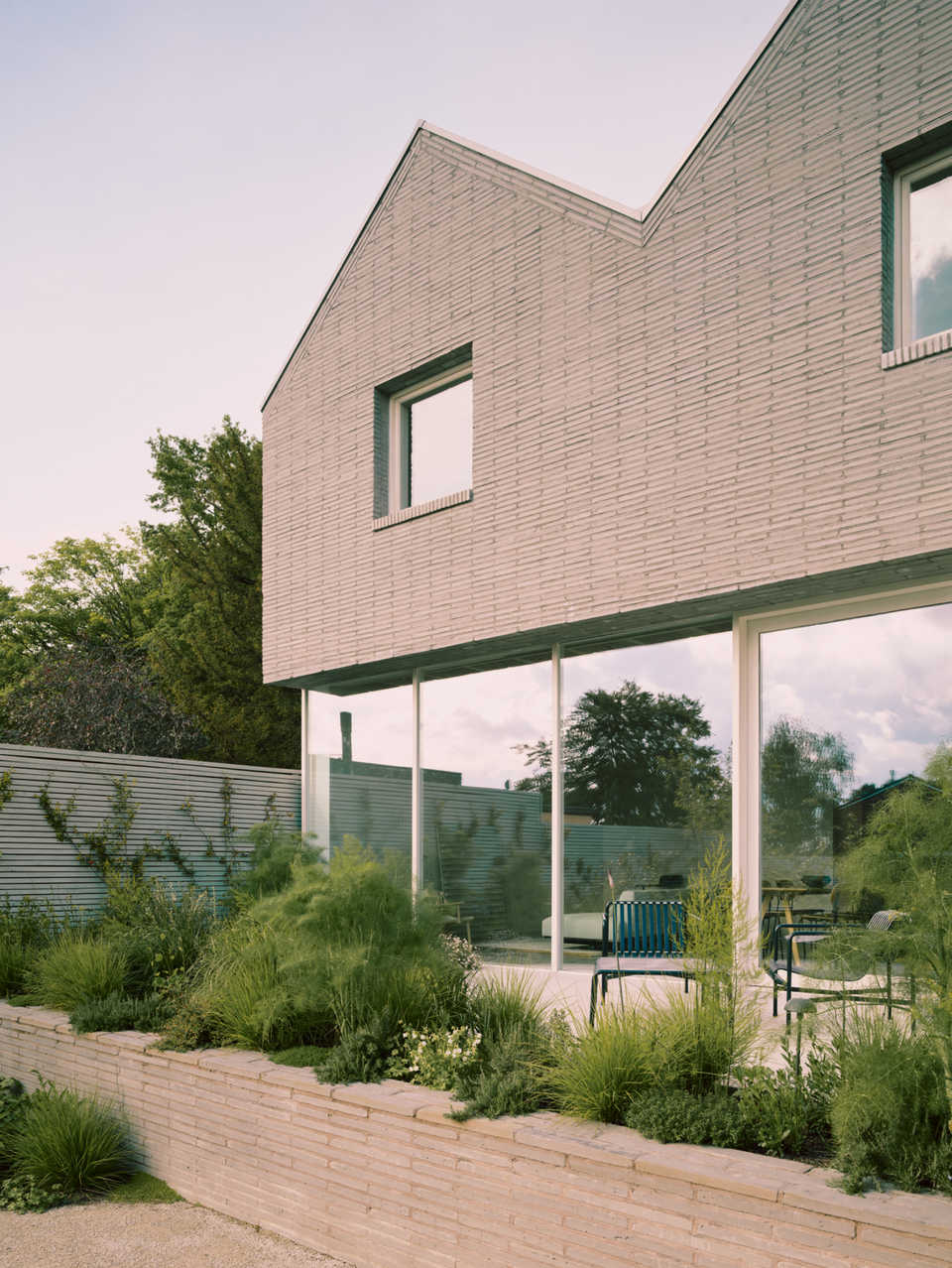
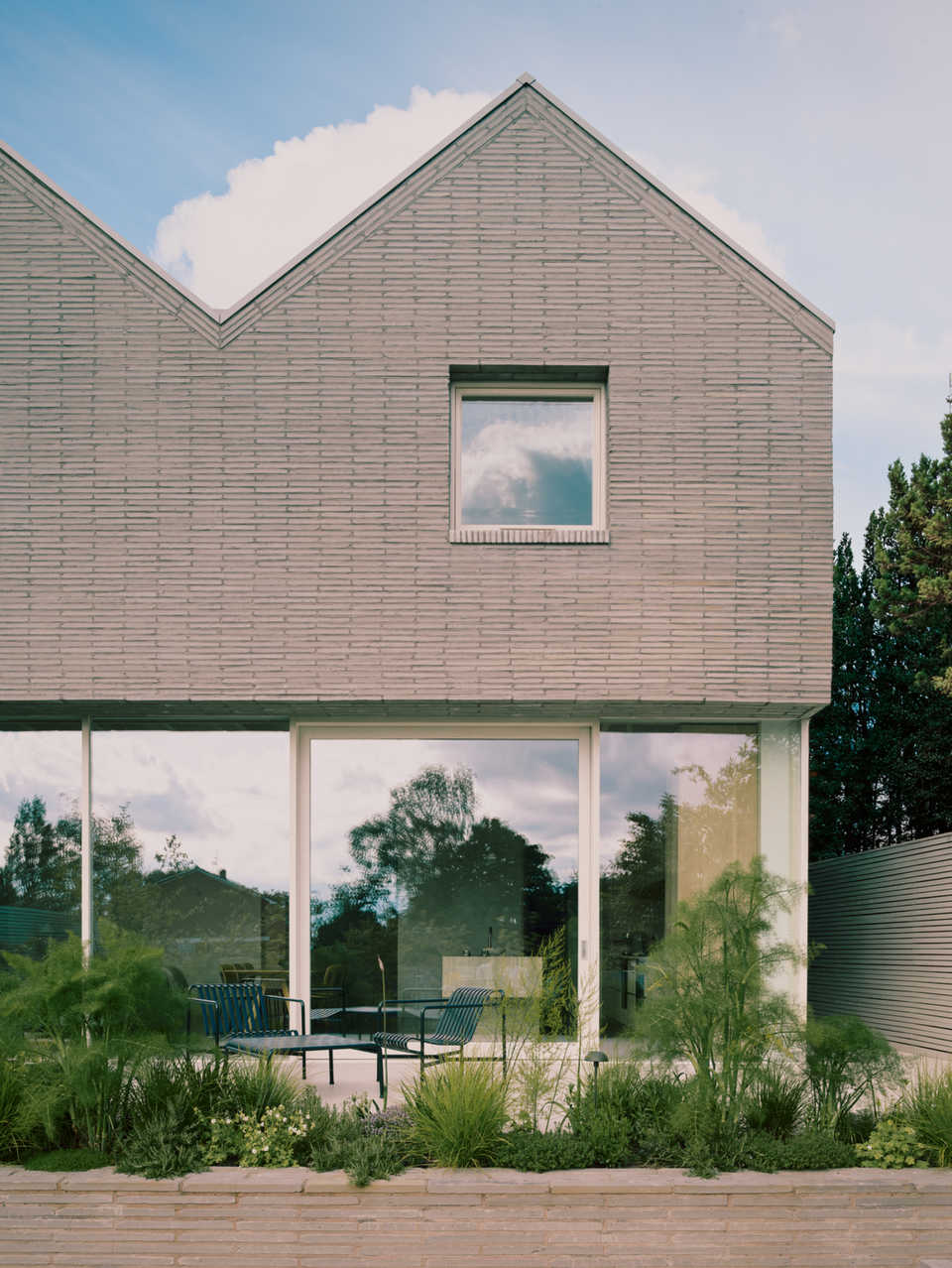
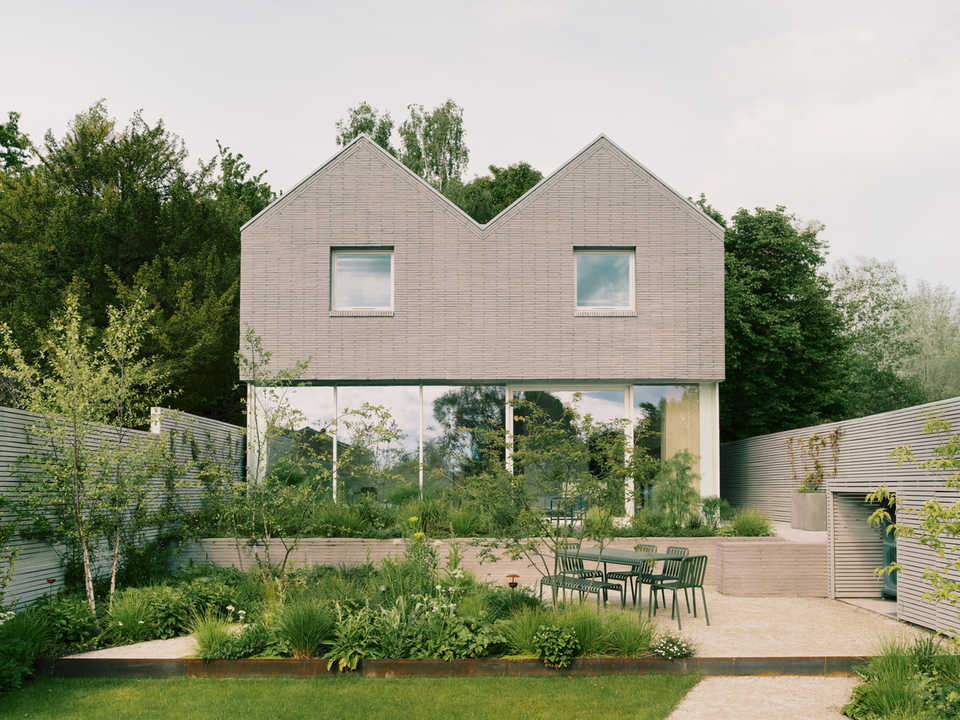
Two offset pitched forms reinterpret the familiar silhouette of a suburban house. Wrapped in long, slender Roman brick, their simple geometry is articulated by a cantilevered entrance, oversized asymmetrical openings and deep reveals that frame the surrounding trees and hold shifting patterns of light and shadow. Working closely with the brick manufacturer, a bespoke detail was developed to maintain a crisp, minimal junction around the windows and at the top of the wall.
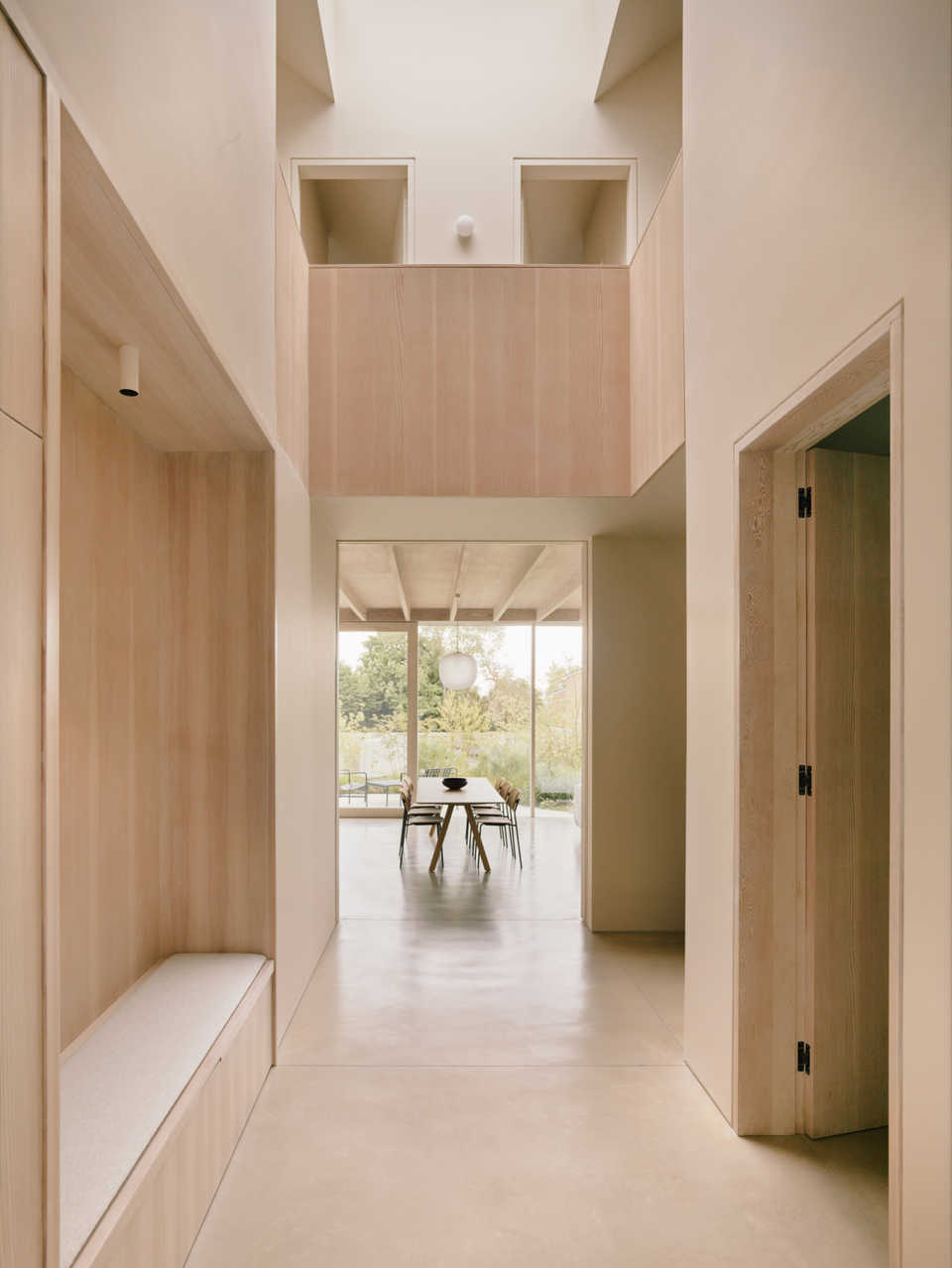
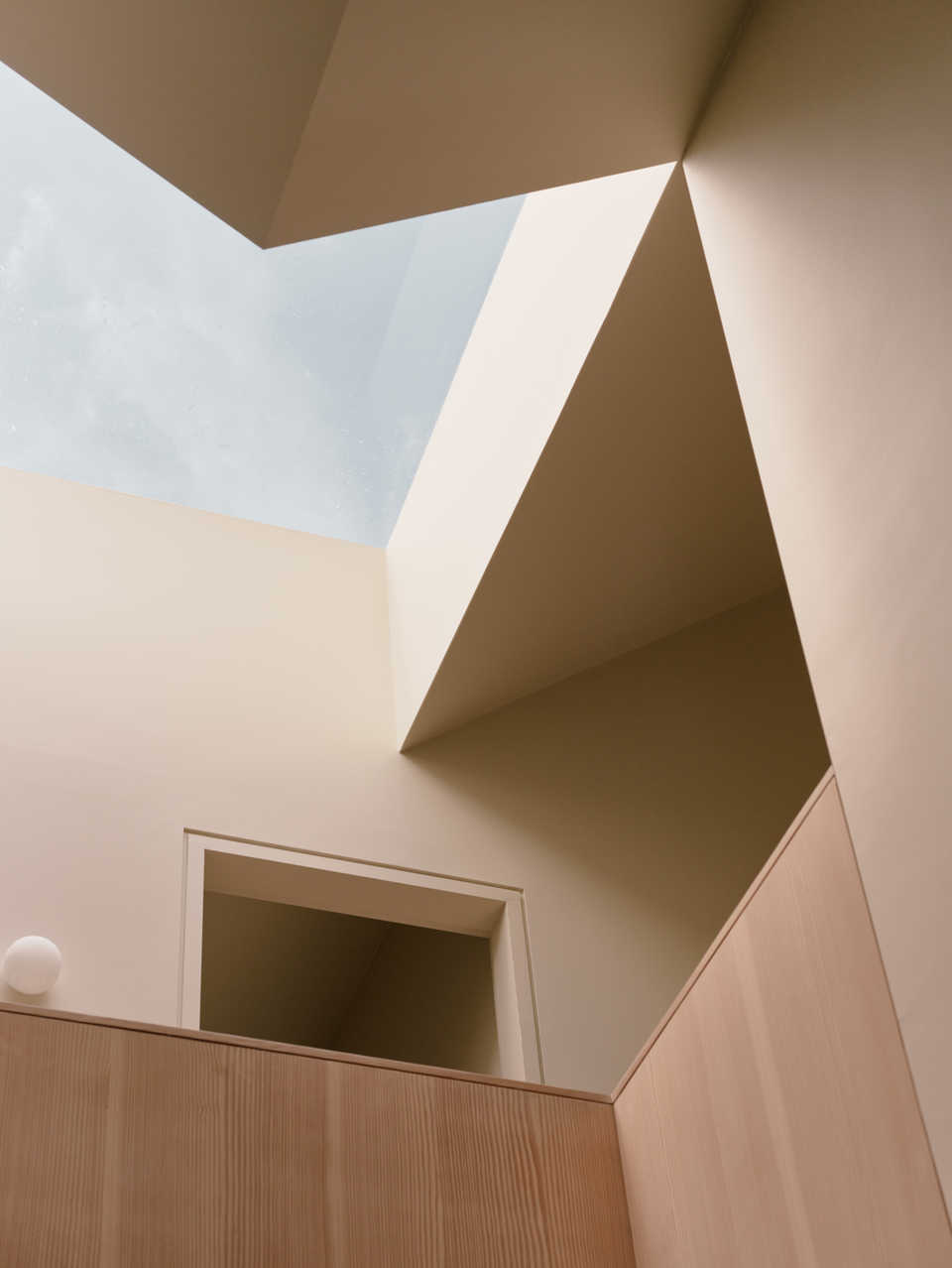
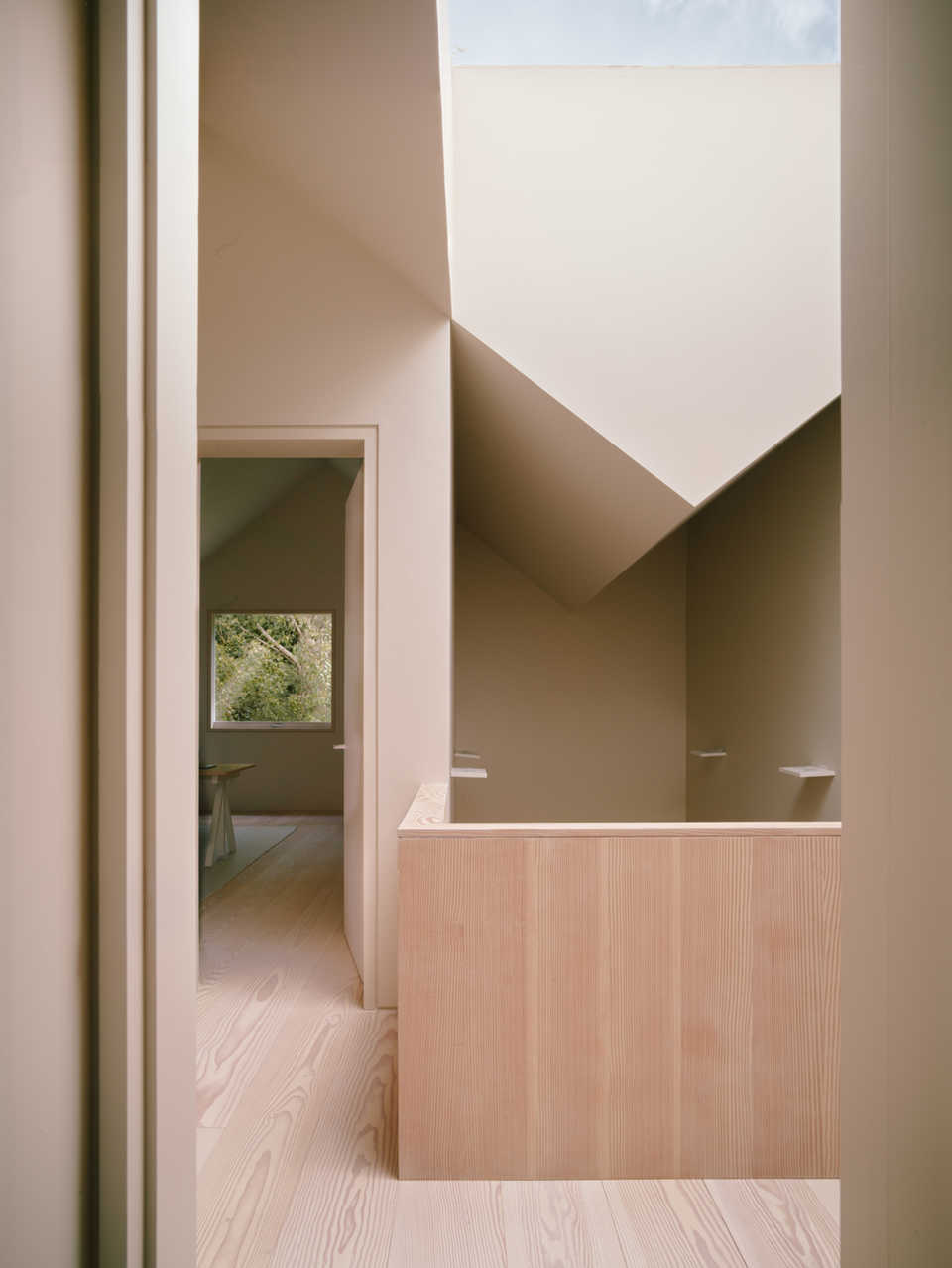
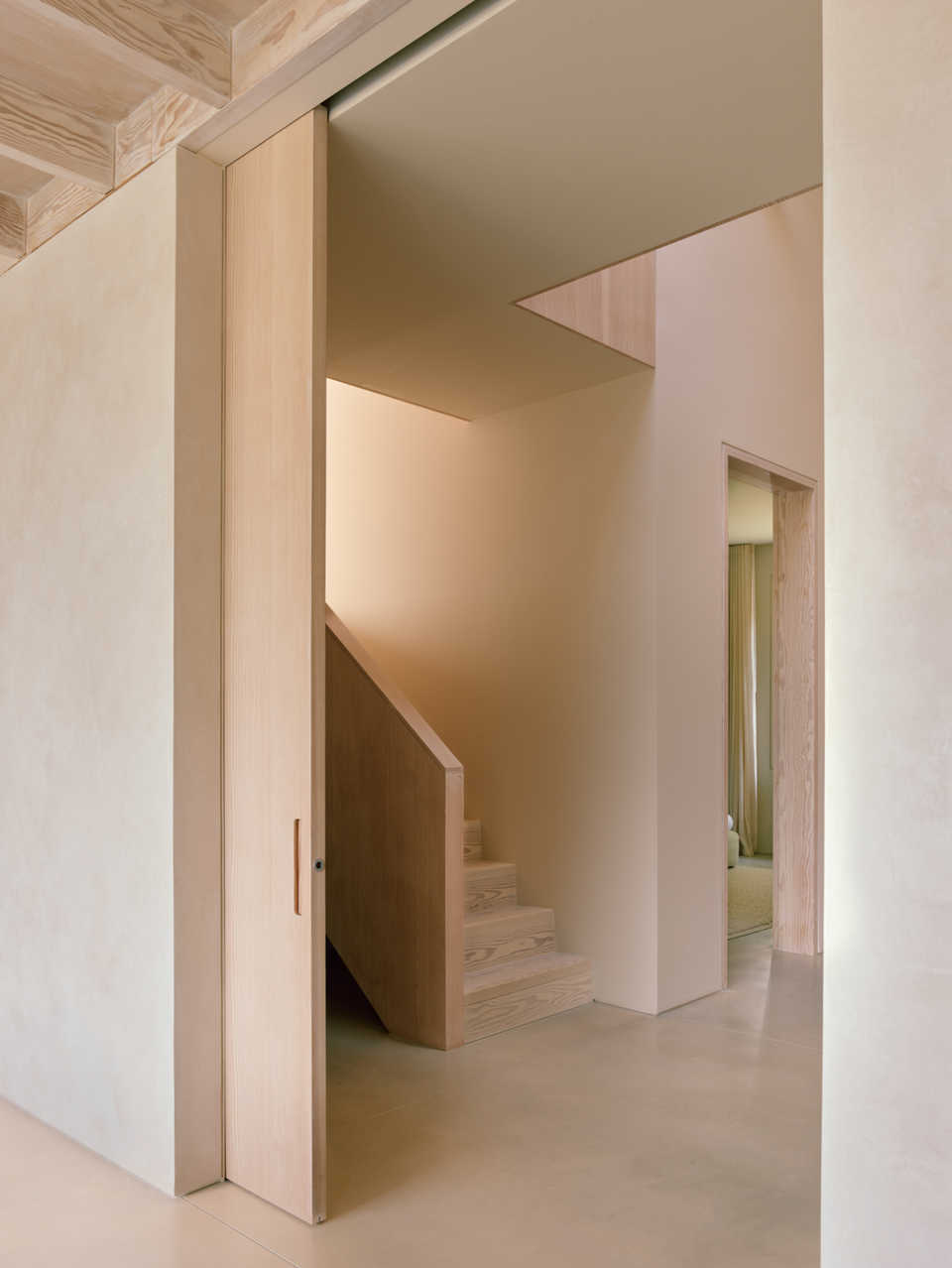
Upon entering the house, a rooflight draws daylight deep into the double-height hallway. A long sightline extends from the entrance, through the living spaces and towards the garden beyond. Along this route, crafted Douglas fir elements — including an integrated bench, oversized pocket door and bespoke staircase and balustrade — bring warmth and character to the space.
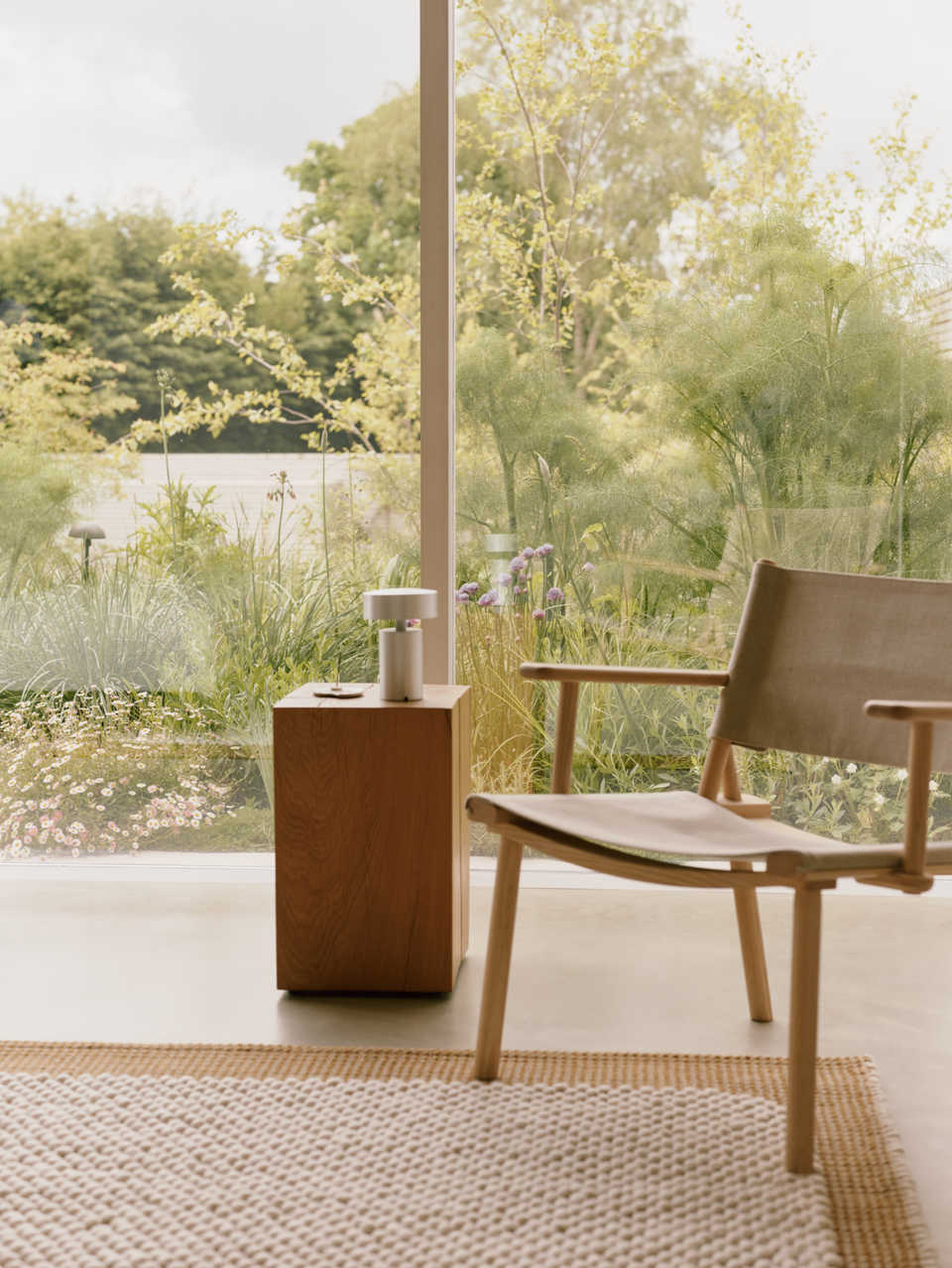
The kitchen, dining and living spaces are brought together beneath expressed Douglas fir joists. Full-height glazing extends across the rear elevation, drawing natural light deep into the plan and creating an uninterrupted visual connection with the garden. The landscape forms a changing backdrop to everyday life throughout the seasons.
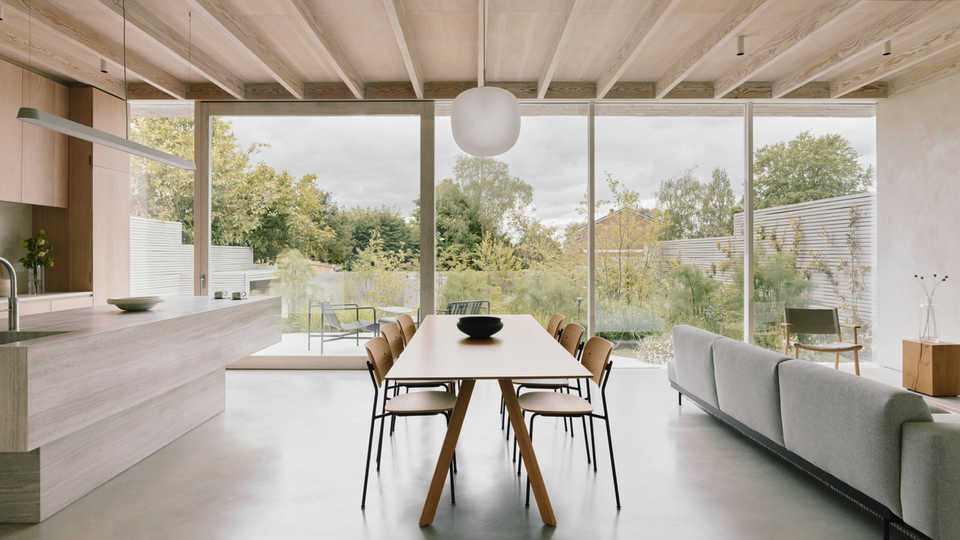
The kitchen is anchored by a sculptural silver travertine island with cantilevered ends. Its pronounced horizontal grain creates a natural focal point and echoes the long, slender proportions of the brickwork outside.
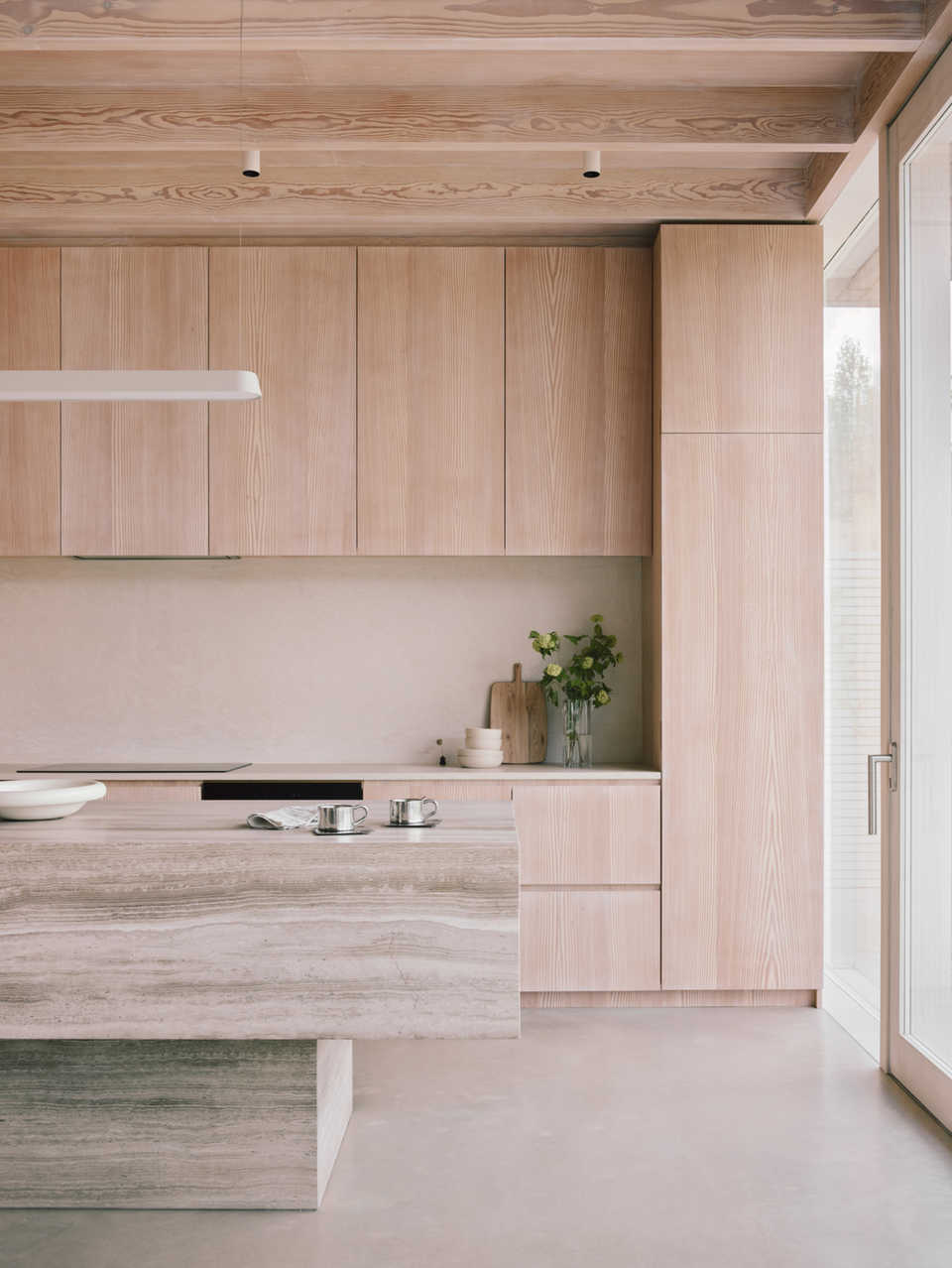
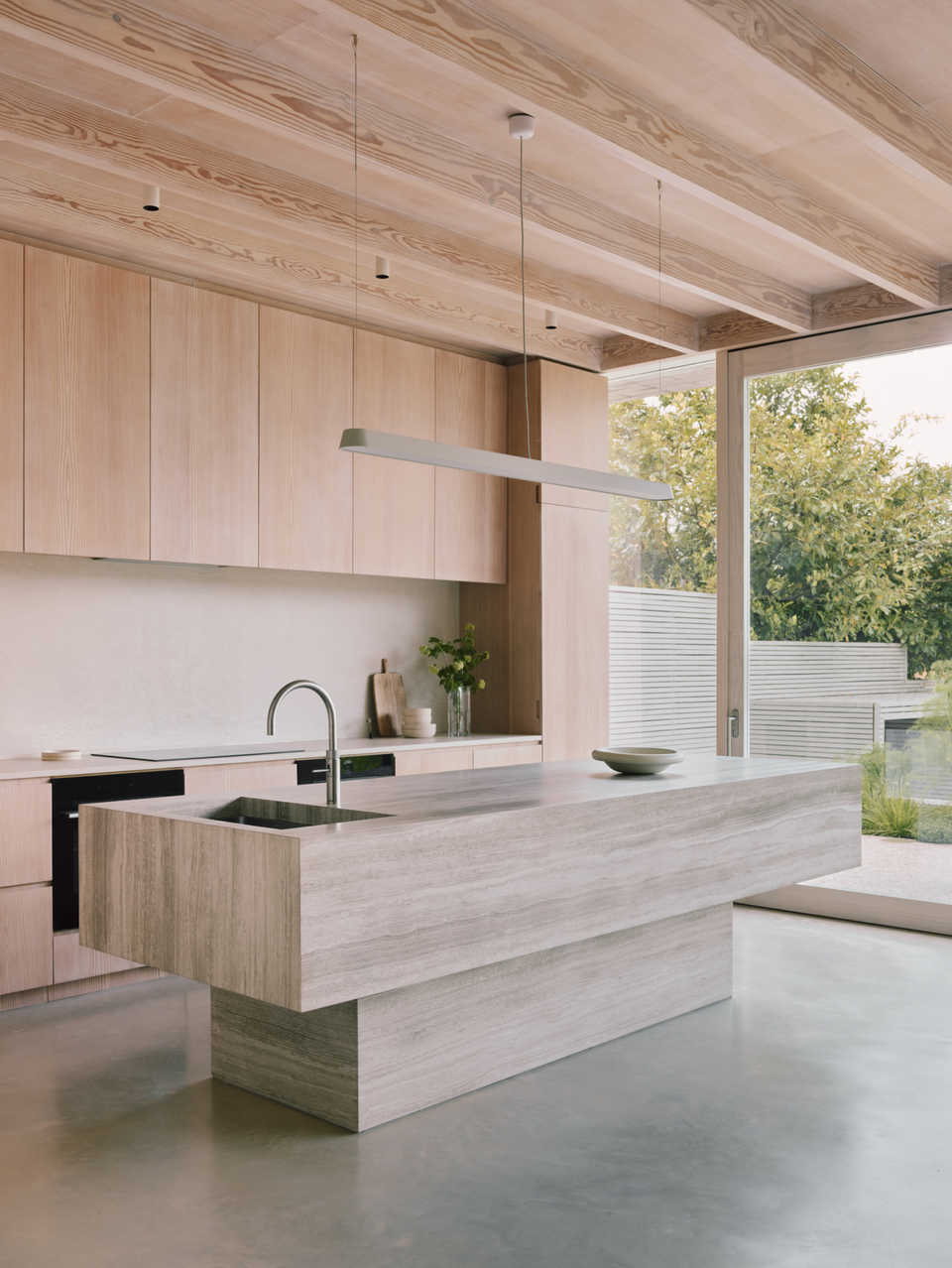
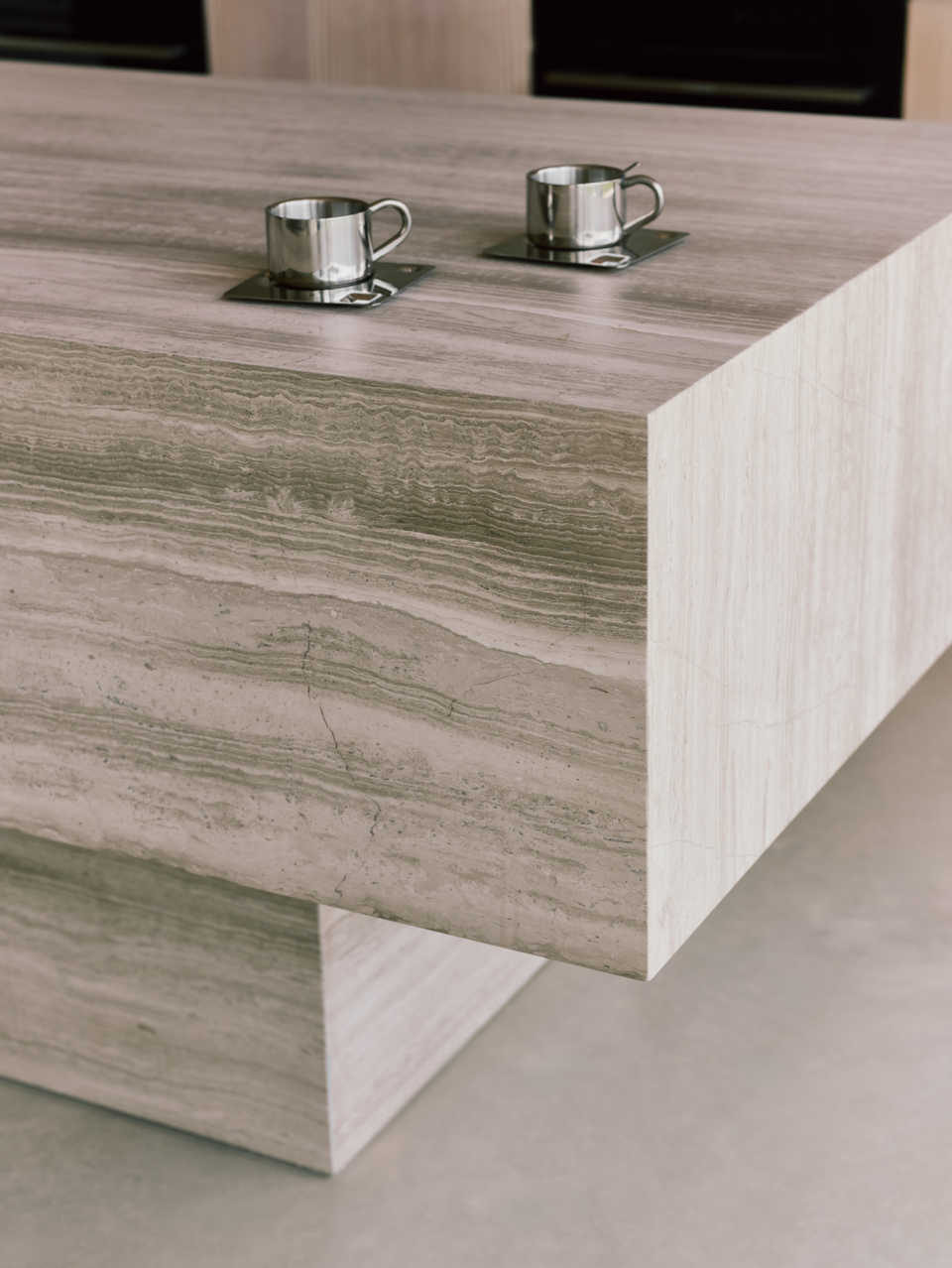
A restrained palette of pale concrete, Douglas fir, clay-finished walls and silver travertine gives the interior warmth and tactility. Exposed joists, full-height joinery and built-in furniture establish a quiet rhythm throughout the house. Rather than relying on applied decoration, character comes through grain, texture, weight and careful craftsmanship.
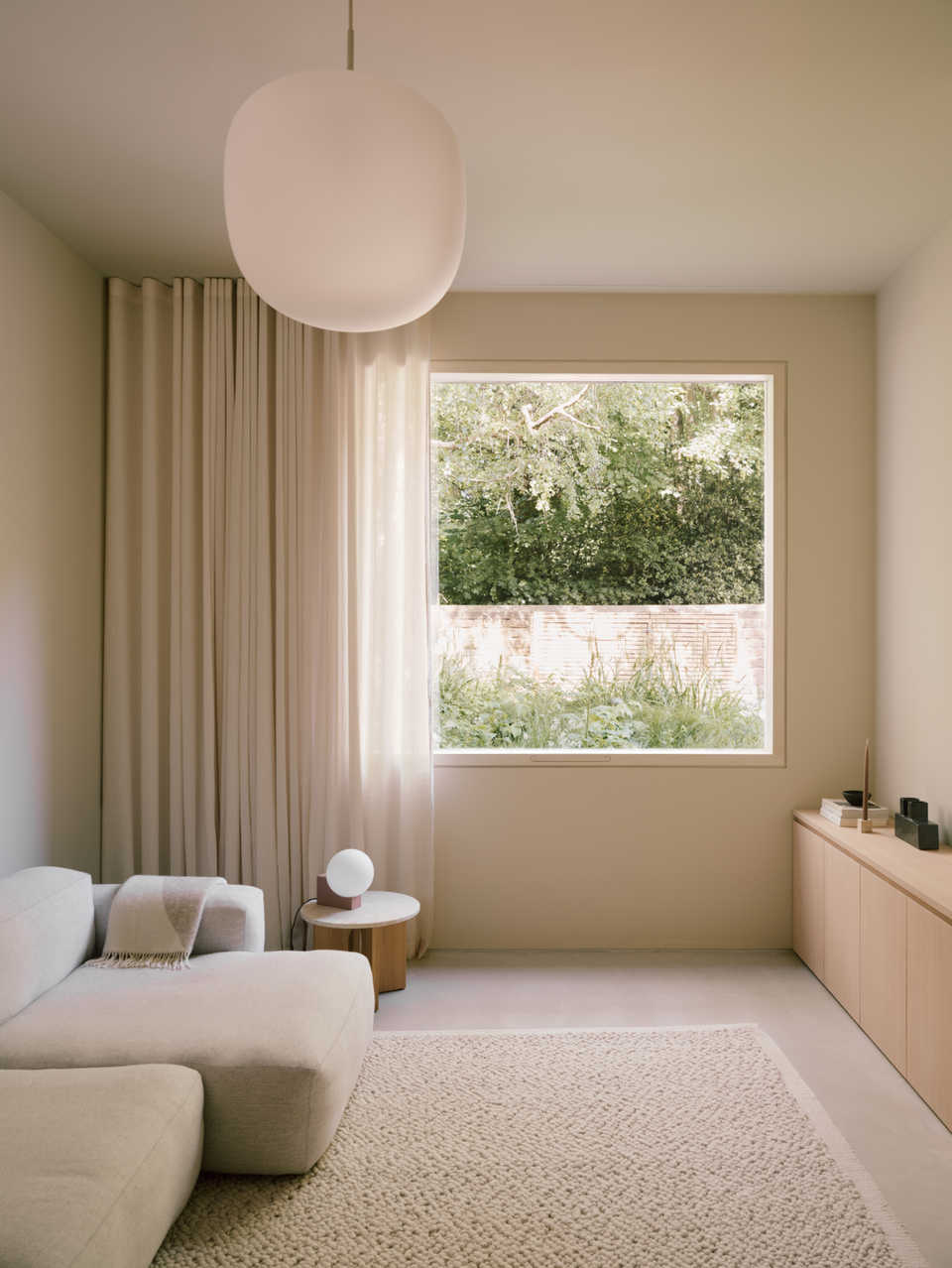
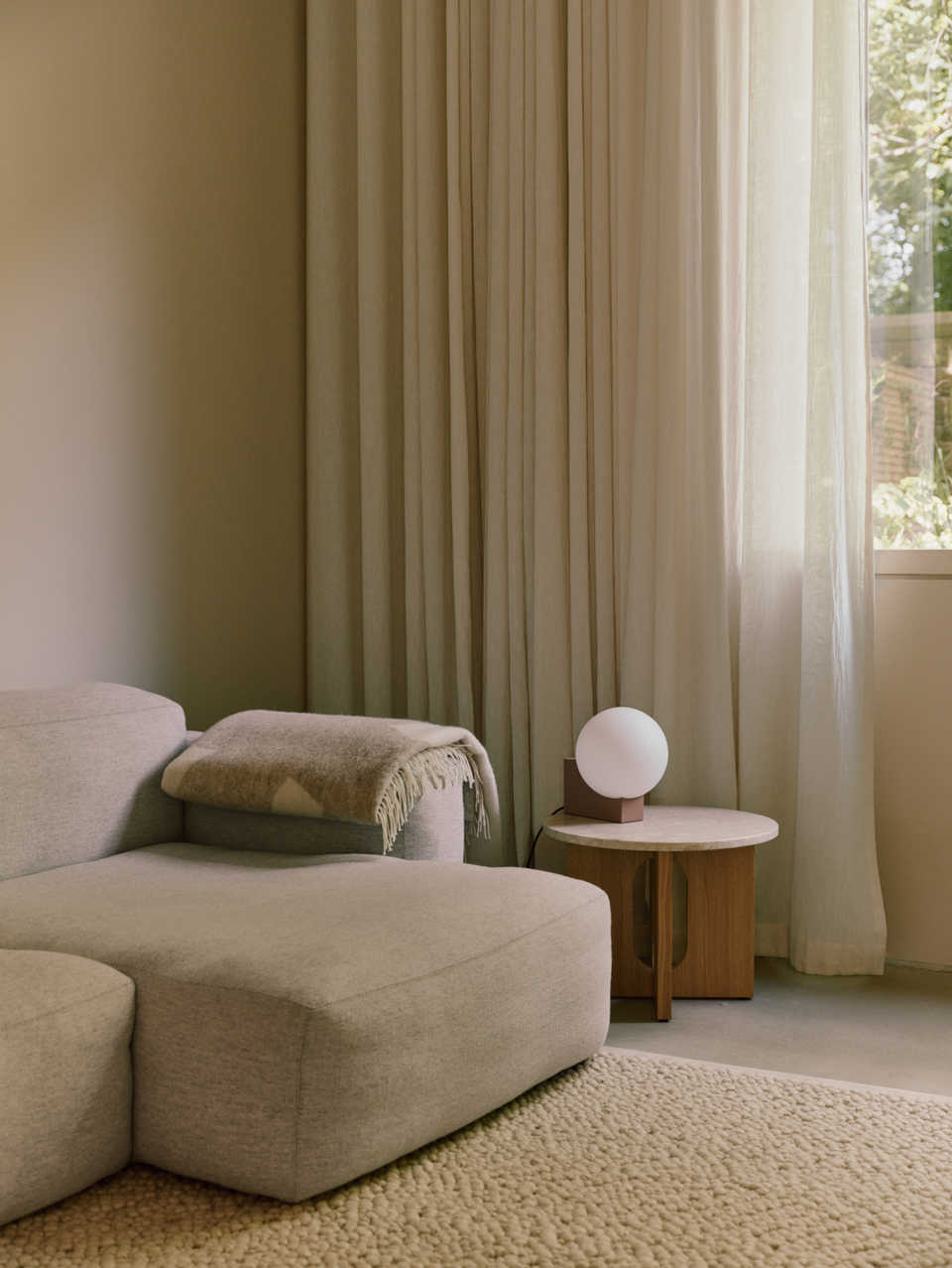
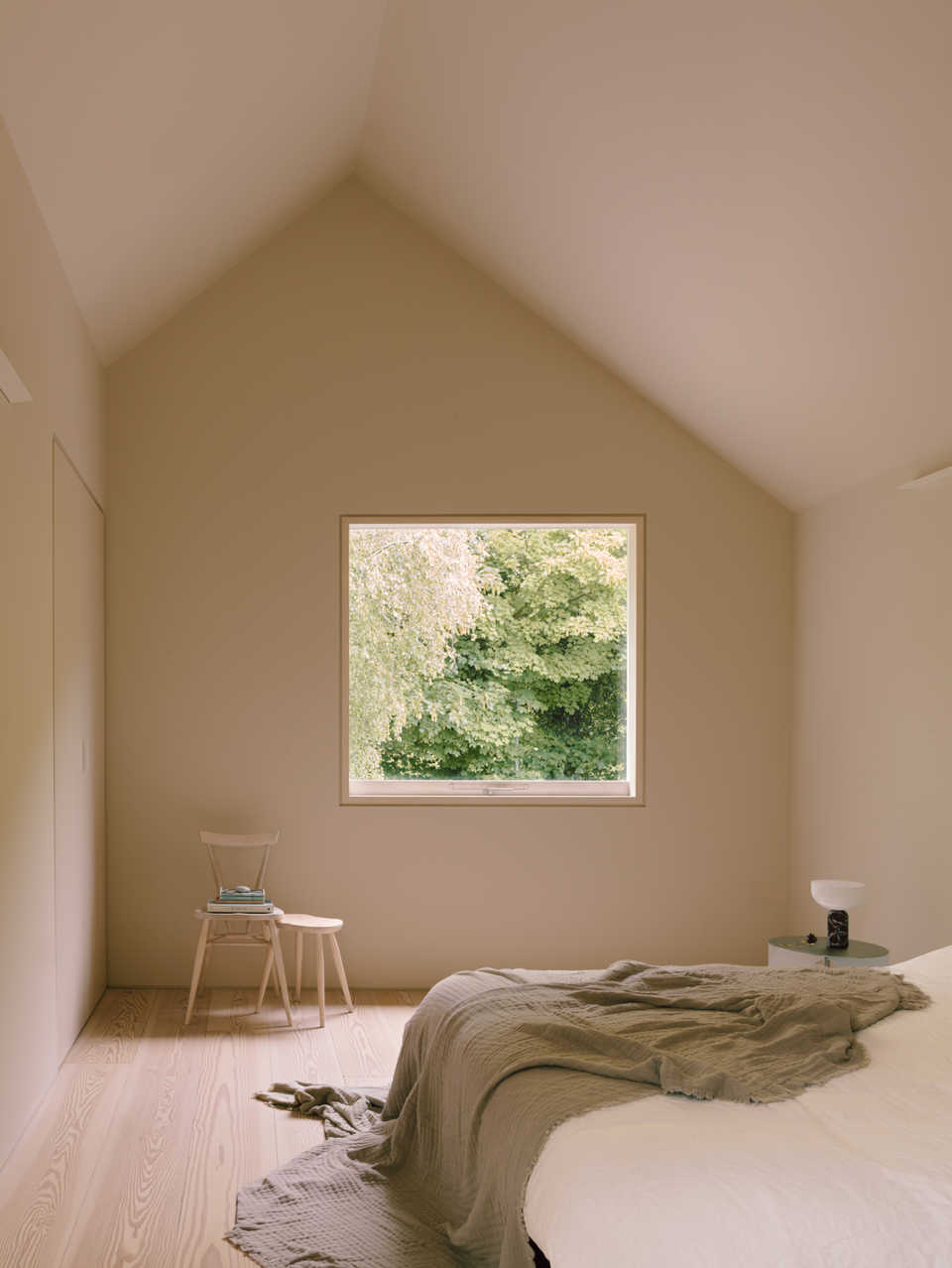
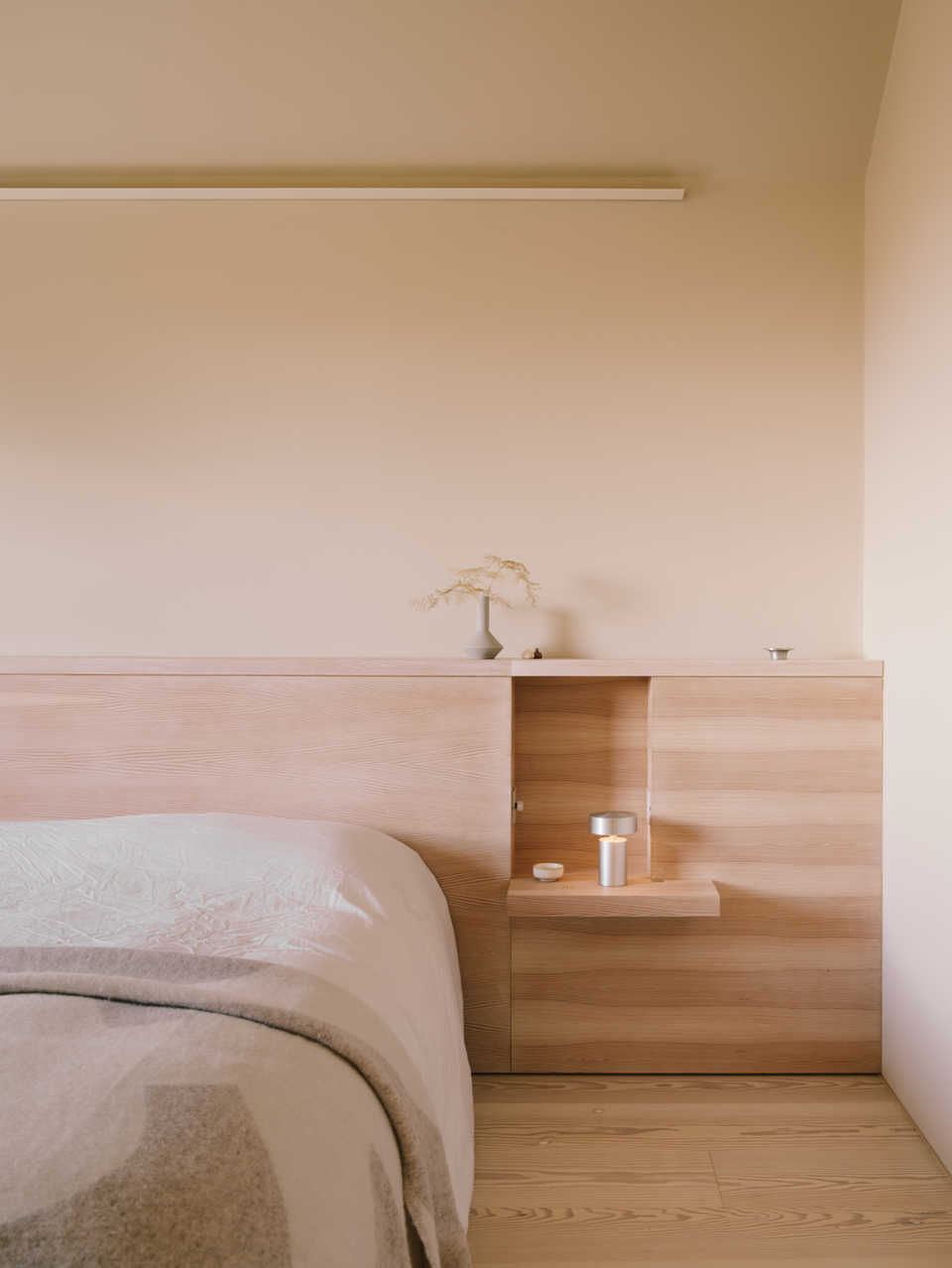
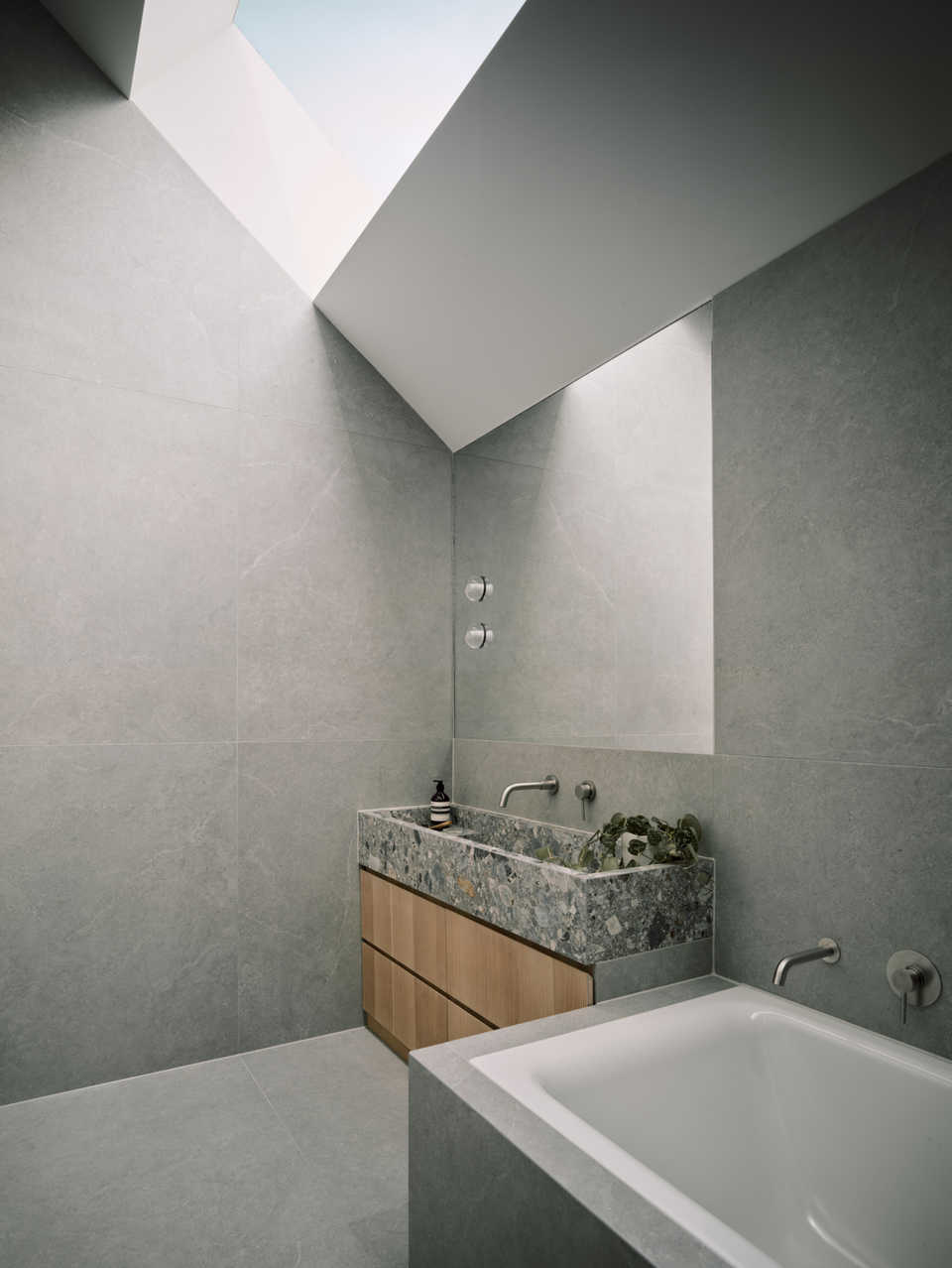
Planting is drawn close to the building, softening the edges of the brickwork and allowing the house to sit within the landscape rather than apart from it. This relationship continues upstairs, where deep-set windows turn views of the garden into framed moments.
Sustainability shaped the project from the outset. Developed alongside an energy consultant, the house follows a fabric-first approach, with enhanced insulation reducing energy demand and creating an efficient thermal envelope. An air source heat pump provides space heating and hot water as part of an all-electric energy strategy.
Together, fabric performance, durable materials and a close connection to nature create a home designed to use less energy, perform over the long term and age well.
Images by Michael Sinclair